


Suicide Prevention
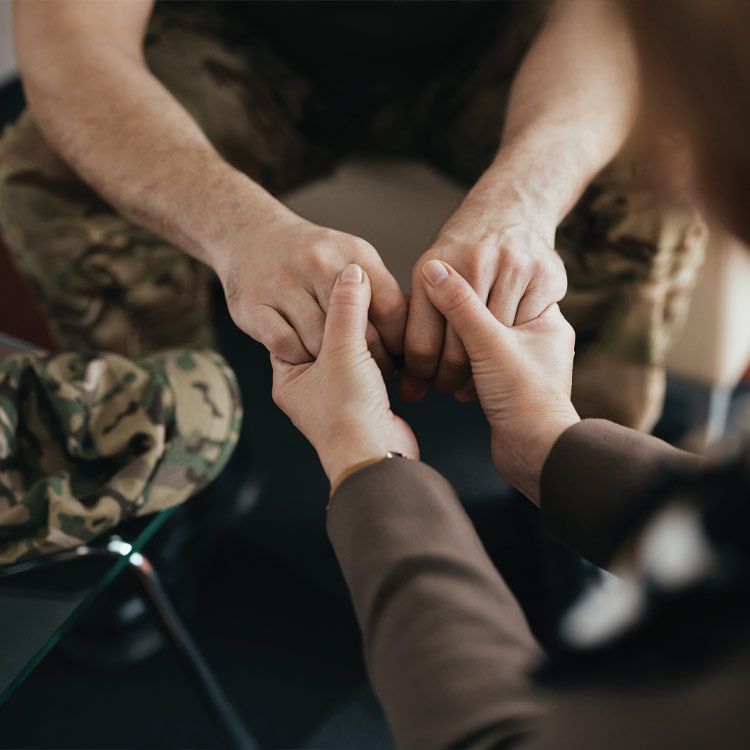
The Nevada Department of Veterans Services (NDVS) Suicide Prevention Program is committed to reducing veteran suicide through outreach, education, and access to lifesaving resources. By working with community partners, providing training, and raising awareness, the program helps veterans and their families recognize warning signs and connect with immediate support.
Home » Health & Wellness » Suicide Prevention
Goal: To reduce and ultimately end Veteran suicide.
Vision: Giving Veterans purpose by connecting them to other Veterans, community providers, and resources in meaningful ways to enrich their lives.
Nevadans across the state work together to identify Service Members, Veterans, and their Family Members (SMVF) at risk for suicide, understand the underlying risk factors for suicide, expedite help, and implement protective factors broadly.
General Assistance Form
Governor’s and Mayor’s Challenge
The goal of the Governor’s and Mayor’s Challenge program is to eliminate suicide by using a comprehensive public health approach to suicide prevention.The Governor’s Challenge team is co-lead by NDVS and the Nevada Office for Suicide Prevention. This team champions for the Mayor’s Challenge teams by facilitating systems changes at the state policy level.
Mayor’s Challenge has been accepted by four Nevada cities. Anyone can participate in these challenges, and we encourage you to get involved.

Preventing Suicide Is Everyone’s Business
The Nevada Department of Health and Human Services has a dedicated Office for Suicide Prevention with information addressing every age group. The mission of the Nevada Office of Suicide Prevention is to reduce the rates of suicide and suicidal acts in Nevada through statewide collaborative efforts to develop, implement and evaluate a state strategy that advances the goals and objectives of the National Strategy for Suicide Prevention.

What To Do
S.A.V.E. stands for “Signs,” “Ask,” “Validate,” and “Encourage and Expedite."
Signs of suicidal thinking should be recognized
Recognizing the signs of suicidal thinking is an important step in preventing tragedy and supporting those in crisis. These signs may include expressing feelings of hopelessness, withdrawing from friends or activities, giving away personal belongings, or talking about being a burden to others. Changes in mood, behavior, or sleep patterns can also be warning indicators. By learning to identify these signs early and responding with compassion and concern—such as listening without judgment and connecting the person to professional help—you can play a vital role in saving a life.
Ask the most important question of all – Are you thinking of killing yourself?
There are behaviors that may be signs a Veteran needs support. Know how to ask the most important question of all:
“Are you thinking of killing yourself?”
Other ways to ask the question include:
“Are you thinking of suicide?”
“Have you had thoughts about taking your own life?”
When asking the question, remember:
- DO ask the question if you’ve identified warning signs or symptoms
- DO ask the question in such a way that is natural and flows with the conversation
- DO NOT ask the question as though you are looking for a “no” answer (“You’re not thinking of killing yourself, are you?”)
- DO NOT wait to ask the question until he or she is halfway out the door.
Validate the Veteran's experience
As you listen to the Veteran, ask him or her do the talking and use supportive, encouraging comments. Use the following steps to let the Veteran know that you are listening and acknowledge his or her experience.
- Talk openly about suicide – Be willing to listen and allow the Veteran to express his or her feelings
- Recognize the situation is serious
- Do not pass judgement
- Reassure them that help is available.
Encourage treatment and expedite getting help
If a Veteran is having suicidal thoughts, remain calm and reassure them that help is available.
- DO NOT keep the Veteran’s suicidal behavior a secret
- DO NOT leave him or her alone
- Try to get the person to seek immediate help from his or her doctor or the nearest hospital or emergency room, OR
Call 911 - You can also call the confidential Veterans Crisis Line at 1-800-273-8255 and Press 1.
Trainings
FREE, Confidential, 24/7 Mental Health Resources!
CredibleMind
Check out CredibleMind at ClarkCountyThrive.crediblemind.com . This online platform provides a wealth of information ranging from proven assessments that helps you better understand and deal with depression, anxiety, burnout, substance abuse and much more! CredibleMind contains evidence based and expert vetted self-help tools and assessments that focus on building skills to thrive mentally and emotionally. You may also be connected to local services and resources in Clark County all at your fingertips.
PsychArmor
Provides you with FREE access to more than 250 military culture educational products for healthcare providers, veterans, employers, military family members, caregivers, and more.
Go to psycharmor.org and explore!
S.A.V.E. Course
Develop a general understanding of the problem of suicide in the U.S., understand how to identify a veteran who may be at risk for suicide; and know what to do if you identify a veteran at risk. PsychArmor courses are available with no registration required on YouTube S.A.V.E. and other training modules, or visit the PsychArmor website for the S.A.V.E. training course and click “Enroll Now”.
15 Things Veterans Want You to Know
This course will teach you 5 questions you should always ask veterans, 1 question you should never ask veterans, and 15 facts that will make your more culturally competent.
T.A.P.S. (The Tragedy Assistance Program for Survivors)
TAPS offers compassionate care to all those grieving the loss of a loved one who died while serving in our Armed Forces or as a result of his or her service.
Make The Connection
An online resource designed to connect Veterans, their family members and friends, and other supporters with information, resources, and solutions to issues affecting their lives.
safeTALK (3 hours)
Learn how to prevent suicide by recognizing signs, engaging someone, and connecting them to an intervention resource for further support. A skilled, supportive trainer will guide you through the course, and a community resource will be on hand to support your safety and comfort.
ASIST (2 days)
An intensive, interactive and practice-dominated course designed to help caregivers recognize and review risk, and intervene to prevent the immediate risk of suicide.
Mental Health First Aid (2.5 hours)
Increases one’s knowledge and understanding of suicide, to recognize warning signs, to identify risk and protective factors, and to increase willingness and ability to intervene with a person at risk for suicide.
Resources
U.S. Department of Veterans Affairs (VA) Resources
975 Kirman Avenue
Reno, NV 89502
Main phone: 775-786-7200
Mental health clinic: 775-326-2920
6900 North Pecos Road
North Las Vegas, NV 89086
Main phone: 702-791-9000
Mental health clinic: 702-791-9062
500 Foothill Boulevard
Salt Lake City, UT 84148-0001
Main phone: 801-582-1565
Mental health clinic: 801-584-1217 x2321
400 North Stephanie, Suite 180
Henderson, NV 89014
Phone: 702-791-9100
Fax: 702-433-5713
Community Based Outpatient Clinics
- Elko: Elko VA Clinic
- Fallon: Lahontan Valley VA Clinic
- Gardnerville: VA Carson Valley Outpatient Clinic
- Pahrump: Pahrump Community Based Outpatient Clinic
- Reno: North Campus
- Reno: VA East Campus
- Winnemucca: VA Winnemucca Rural Outreach Clinic
Statistics
According to the U.S. Department of Veterans Affairs 2021 National Veteran Suicide Prevention Annual Report, Office of Mental Health and Suicide Prevention, 2021 National Veteran Suicide Prevention Annual Report (PDF) :
The U.S. population, as well as the Veteran population, experienced a decrease in the suicide count and rate from 2018 to 2019. 45,861 Americans adults died by suicide in 2019. Veterans accounted for 6,261 of these deaths.
For this report, a Veteran is defined as someone who has been activated for federal military service and was not currently serving at the time of death.
Report Statistics
- 2023 National Veteran Suicide Prevention Annual Report: In 2021, suicide was the 13th-leading cause of death for Veterans overall, and the second-leading cause of death among Veterans under age 45-years-old. There were 6,392 Veteran suicide deaths in 2021. This was 114 more than in 2020. 17.5 suicide deaths per day among Veterans. In 2021, there were 6,042 suicide deaths among Veteran men and 350 suicide deaths among Veteran women. The unadjusted rate of suicide in 2021 among U.S. Veterans was 33.9 per 100,000, up from 32.6 per 100,000 in 2020.
Resource: https://www.mentalhealth.va.gov/suicide_prevention/data.asp
COVID-19: Monitoring of VHA Suicide-Related Indicators Key Finding:
- VA has not observed increases in documentation of the above suicide-related indicators.
- VA has observed increases in all-cause mortality among Veteran VHA patients, including those with and those without diagnosed mental health conditions. Increased all-cause mortality associated with the pandemic exceeds the number of VA deaths that have been directly attributed to COVID-19.
- Age- and sex-adjusted all-cause mortality is greater among Veterans in VHA care with mental health conditions compared to other Veterans in VHA care.
- The level of differential mortality by mental health status has not increased since the pandemic began.
- 2024 Office of Analytics Suicide Mortality Report- In 2023, 129 Veterans died by suicide. The rates of suicide among the Veteran population fluctuate from year to year but overall remain higher than the rates of suicide among non-veteran populations (per capita). Suicide ranks as the 9th primary cause of death among both Veteran and Non-Veteran populations at 2% of the total deaths in Nevada. In 2023, the highest percentage of suicides occurred in the 75-84 age group accounting for 22% for N=129. In 2023, the veteran population rate of 59.4 per 100,000 compared to the non-veteran population rate of 19.5 per 100,000.
- 2024 Office of Analytics Suicide Mortality Report- Between 2019 to 2023: 613 Veterans died by suicide. Highest percent of suicides occurred in the 75-84 age group among Veterans accounting for 22% of the N=613 suicide-related deaths. The highest number of suicides between Veterans and Non-Veterans were caused by firearms accounting for 58% of Non-Veteran deaths and 77% of Veteran deaths. Among the male population, 78% of Veteran suicides were by firearms/explosives, compared to 62% of Non-Veteran suicides. Among the female population, the greatest difference in method was firearms/explosives, which accounted for 67% of Veteran suicide deaths and 40% of Non-Veteran suicide deaths.
Resource: https://dhhs.nv.gov
Current Department of Health and Human Services Report: DHHS Suicide Prevention Report- November 2020
Previous Annual Report: 2020 National Veteran Suicide Prevention Annual Report (PDF)